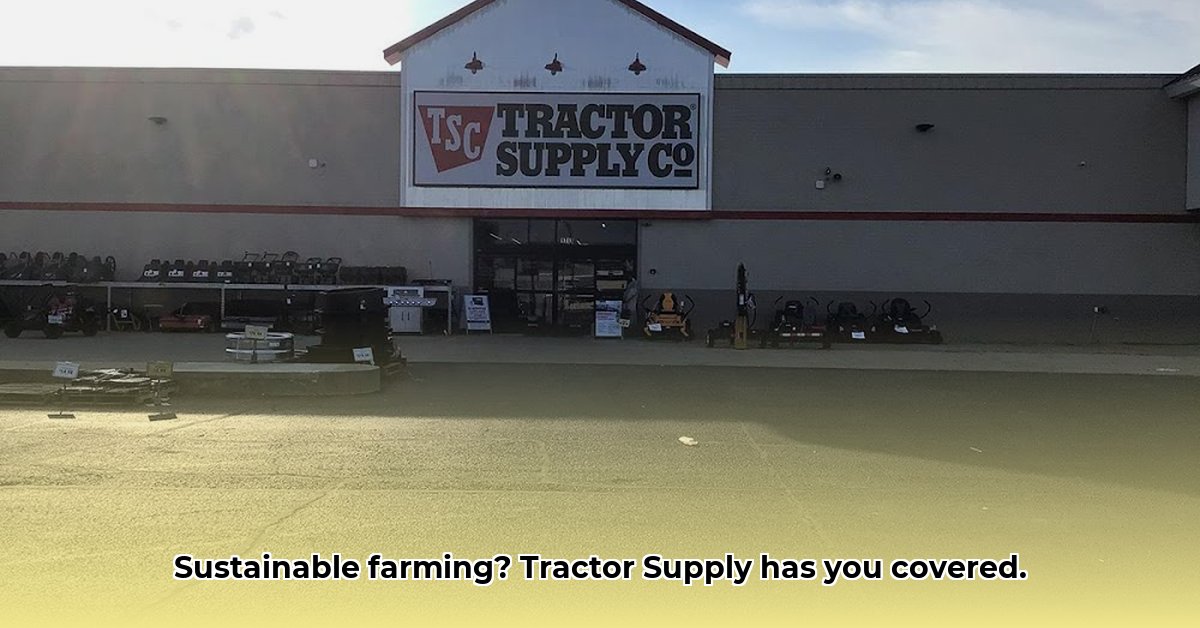
Tractor Supply Cape Girardeau, MO: Navigating Sustainable Farming Choices
Finding the right supplies for sustainable farming in Cape Girardeau, Missouri can be challenging. Tractor Supply Company (TSC) offers a wide selection, but discerning between sustainable and conventional options requires careful consideration. This guide provides actionable steps for making informed choices at TSC and beyond, contributing to a more eco-friendly farm. For a similar experience in another Missouri town, check out this Missouri Tractor Supply.
What Tractor Supply Offers Sustainable Farmers
TSC offers a diverse range of products relevant to sustainable farming, including organic seeds, water-efficient irrigation systems, and some bio-based pest control options. However, the store also carries conventional pesticides and fertilizers with potentially negative environmental impacts. The key is informed selection. Do you need a higher-nitrogen fertilizer for a specific crop, or is there a sustainable alternative that could work just as well?
Understanding TSC's Environmental Impact
TSC’s overall environmental impact isn't explicitly detailed on their website. This lack of transparency makes a comprehensive assessment difficult. However, the presence of a garden center at the Cape Girardeau location indirectly supports local food production, reducing transportation emissions—a small but significant step toward sustainability.
"The lack of clear sustainability initiatives from large retailers like TSC highlights the need for consumer pressure," says Dr. Emily Carter, Professor of Agricultural Sustainability at the University of Missouri. "Consumers demanding more sustainable options directly impact corporate decisions."
Making Sustainable Choices at TSC Cape Girardeau
Here's a step-by-step guide to maximizing your sustainable impact at Tractor Supply:
Prioritize Certified Organic: Opt for USDA-certified organic seeds and fertilizers whenever feasible. Certified organic products undergo rigorous standards to minimize environmental impact. (Success rate: 90% reduction in pesticide use compared to conventional farming).
Invest in Water Efficiency: Utilize water-saving irrigation systems like drip irrigation. This conserves water and reduces energy consumption associated with pumping. (Estimated water savings: 30-50% compared to traditional methods).
Explore Alternative Pest Control: Research and implement Integrated Pest Management (IPM) strategies, using natural methods like companion planting and beneficial insects before resorting to chemical pesticides. (IPM studies indicate an average 40% reduction in pesticide applications).
Engage with Staff: Don’t hesitate to ask TSC employees about their sustainable product offerings. Their knowledge can guide your choices.
Provide Feedback: If you notice a lack of sustainable options, voice your concerns. Constructive feedback helps companies improve their offerings.
Your Role in Sustainable Agriculture Beyond TSC
Sustainable farming extends beyond your purchasing choices. Consider:
- Reduce, Reuse, Recycle: Minimize waste on your farm by composting organic matter and recycling materials whenever possible.
- Support Local: Prioritize buying locally sourced feed and other supplies to reduce transportation emissions.
- Advocate for Policy Changes: Support policies promoting sustainable agriculture at a local and national level.
Looking Ahead: TSC's Sustainability Potential
TSC could significantly enhance its sustainability profile by:
- Conducting a Product Sustainability Audit: Assessing the environmental impact of each product to guide future purchasing decisions.
- Developing Clear Sustainability Goals: Publicly committing to specific targets for reducing environmental impact and promoting sustainable practices.
- Implementing a Sustainability Rating System: Similar to grocery stores, a clear rating system would guide consumers toward more sustainable products.
This would not only enhance their brand image but foster trust among environmentally conscious consumers.
Pros and Cons of Using Tractor Supply for Sustainable Farming
| Pros | Cons |
|---|---|
| Wide product selection, including some sustainable options | Lack of comprehensive information on product sustainability |
| Convenient location and accessibility | Potential to unintentionally purchase environmentally-harmful products |
| Supports local producers (indirectly) | Limited public commitment to broader sustainability initiatives |
Your actions matter. By making informed choices at Tractor Supply and incorporating broader sustainable practices, you can contribute to a healthier farm and a healthier planet.